Livorno, Tuscany

Livorno, Port - Tuscany, Italy

Explore the Cities and Towns of Tuscany

Our Local Expertise

Over 20 years of crafting exceptional journeys across Livorno

Licensed & Certified

We work exclusively with accredited guides and professional chauffeurs across Italy.

Local Knowledge

Our team lives and works here, offering insight beyond the landmarks.

Tailored for You

Every itinerary is thoughtfully crafted around your pace, from private dawn tours to intimate vineyard tastings.

Overview

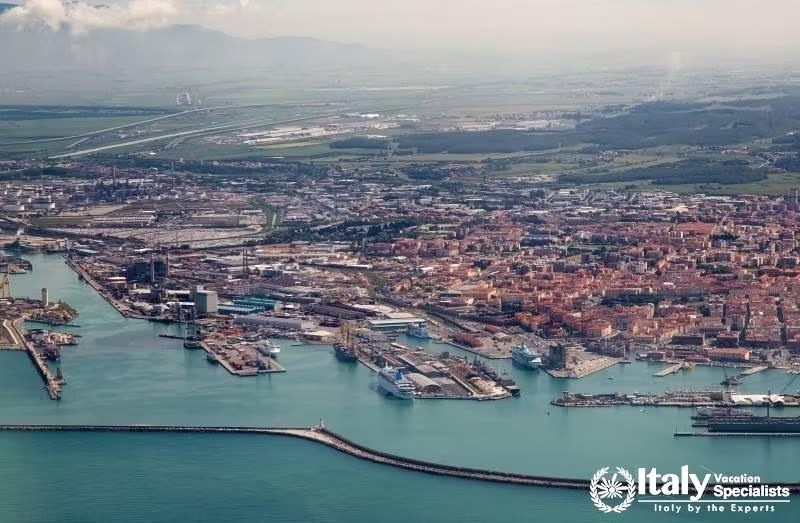
Livorno is one of Italy's most important port towns and has been for centuries.  Most people who ever visit Livorno arrive on a cruise ship.  At first glance, Livorno is by no means one of the most picturesque Tuscan cities, for  tt is a modern port city with a lot of industrial activity, and it does not have an evocative medieval heart.  The city is is spread across a series of rocky out-croppings, quite unlike the wide, sandy beaches that one will find to its north and south.  But the city is historically interesting and has its delights, including great seafood.
 
Livorno, sometimes called Leghorn by the English, is the third largest port on the Tyrrhenian Sea coast of Italy, after Genoa to the north and Naples to the south.  Historical documents refer to a cathedral that was built here in about 891 AD, but until the 15th century, it was a small fishing village and port of very little consequence.  The main Tuscan port at this time was Porta Pisa a little to the north and further inland along the Arno River.  Livorno's status and fortunes changed when the Medici rulers of Florence  made it the principle Mediterranean port for Tuscany.
 
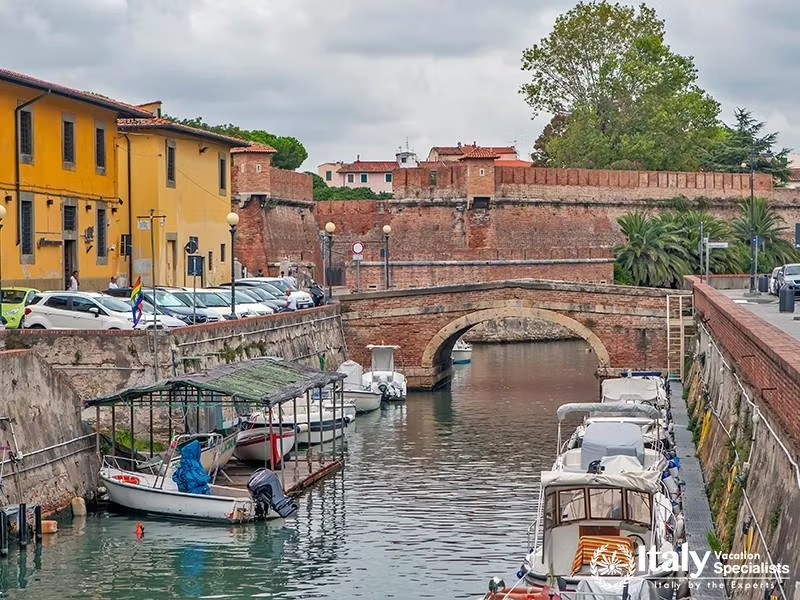
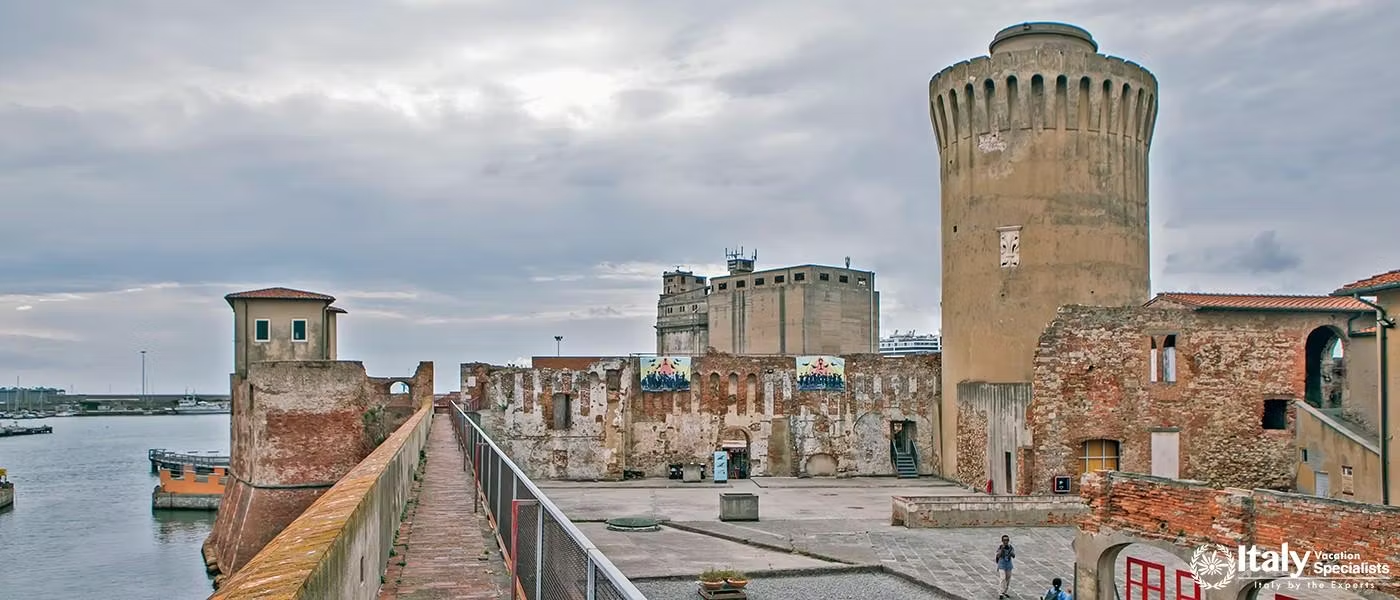
Livorno's harbor is irregularly shaped, and a number of canals penetrate deeply into the old part of the city, a kind of ersatz Venice, but with a charm all its own and not one at all reminiscent of that other, older city.  Indeed, the heart of the city is called Venezia Nuova, or Porto Mediceo, which was built in the 16th century under orders from the Medici, Cosimo I, Grand Duke of the Duchy of Florence.
 
The harbor, canals, waterside fortress - the Fortezza Vecchio - and the centro storico were laid-out and built to a comprehensive design done by Bernardo Buontelenti who had much of the building work done by Venetian craftsmen.  The fortress was designed by Antonio de Sangalla, and incorporates an older Pisan fort, an 11th century tower, which pokes out the top, and a Roman castrum.
 
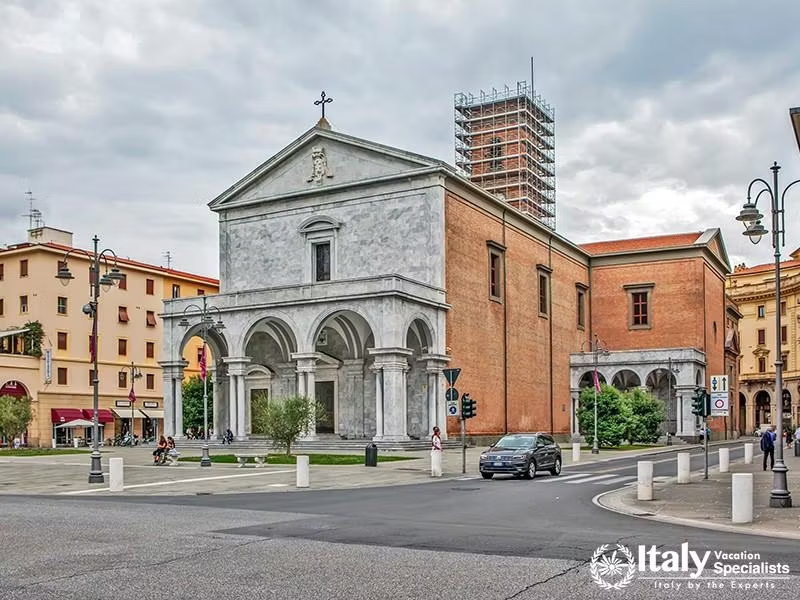
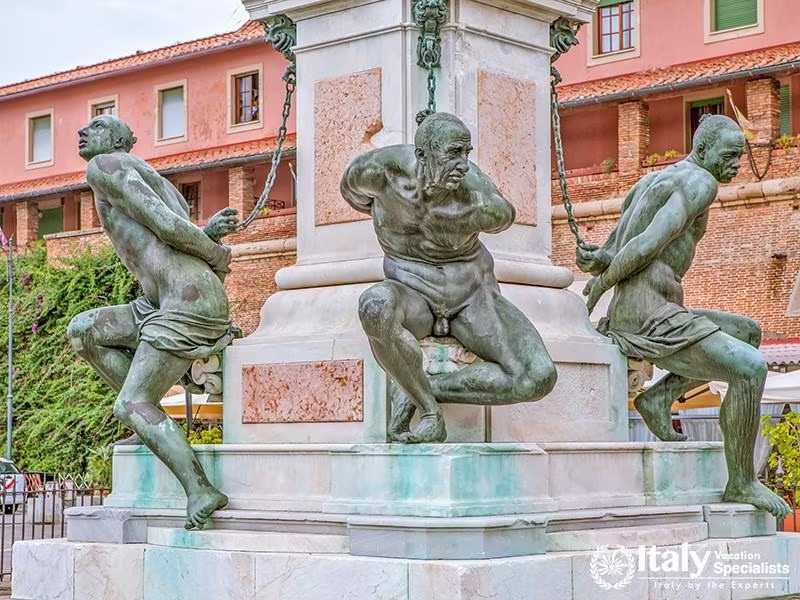
Architectural treasures are few and far between.  The bronze statue called the Quattro Mori - statue of the Four Moors - dating to 1595 is of special interest.  Four Moorish slaves writhe in their chains beneath Ferdinand I who stands above. The Duomo, originally built in 1587, then rebuilt after World War II, is not ugly, but not particularly beautiful either.  Of more importance historically is the Jewish Synagogue dating back to the early 17th century.
 
Not surprisingly, many of the buildings built in the 16th century were done in a post-Renaissance style.  The city core is surrounded by the Fosso Reale canal which is bridged on the east side by a high vaulted bridge called the Voltone, upon which rests the Piazza della Repubblica.  The popular, if down at heels, Fortezza Nuova sits on its north side.
 
Leading out of the Piazza della Repubblica, the via Grande passes via Madonna, where one finds the facades of three Baroque churches, and leads to the Piazza Grande, fronted by the Duomo, the building of which started in 1587.  It was badly damaged during WW II, but rebuilt.  The Piazza has been intersected by a modern building, which one must go around in order to get to the rest of the Piazza, where one will find the  17th century Palazzo di Camera and the Palazzo Municipio, with its double sided staircases, built in 1720.
 
Ocean going cargo vessels, cruise ships, ferries and other larger craft sit with an industrial brutishness in the port area, loading or unloading their human and non human cargoes, but colorful small boats and private yachts bob in the waters along the landings closer to shore, and in the canals, virtually all of which are still navigable.  One of these canals, not in use now, connects Livorno to Pisa.
 
The shoreline promenade, extends for many kilometers, incorporating a number of humped-back bridges over the canals. The promenade passes in front of a number of imposing 19th century buildings, many constructed in the Liberty style - an Italian variation of the French Art Nouveau style. In many places the oleander, pine trees and tamarisks offer a lush, green, and fragrant counterpoint to both the city and the sea.
 
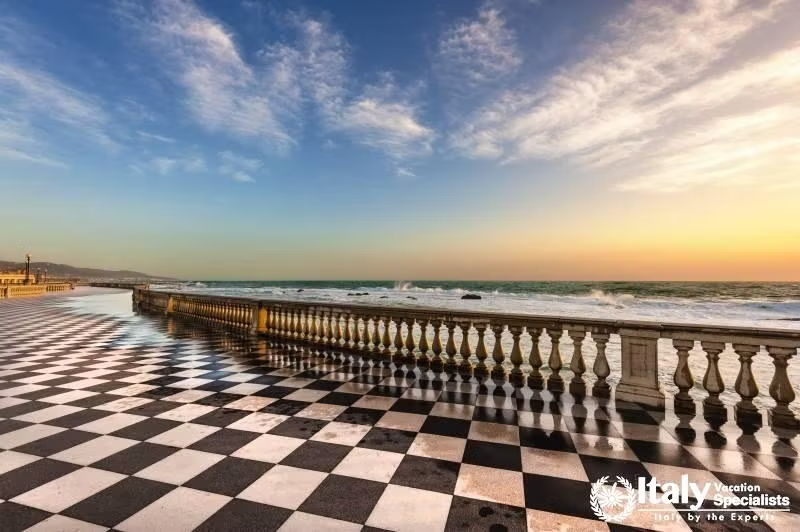
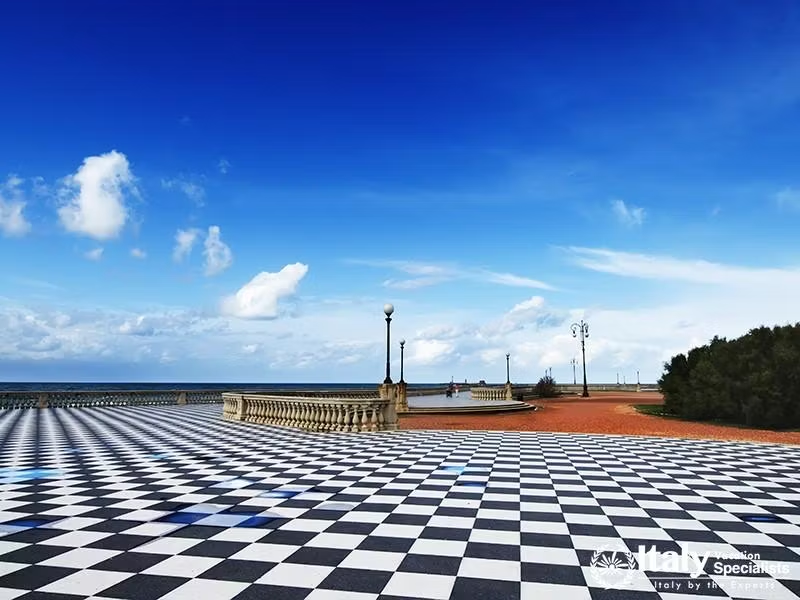
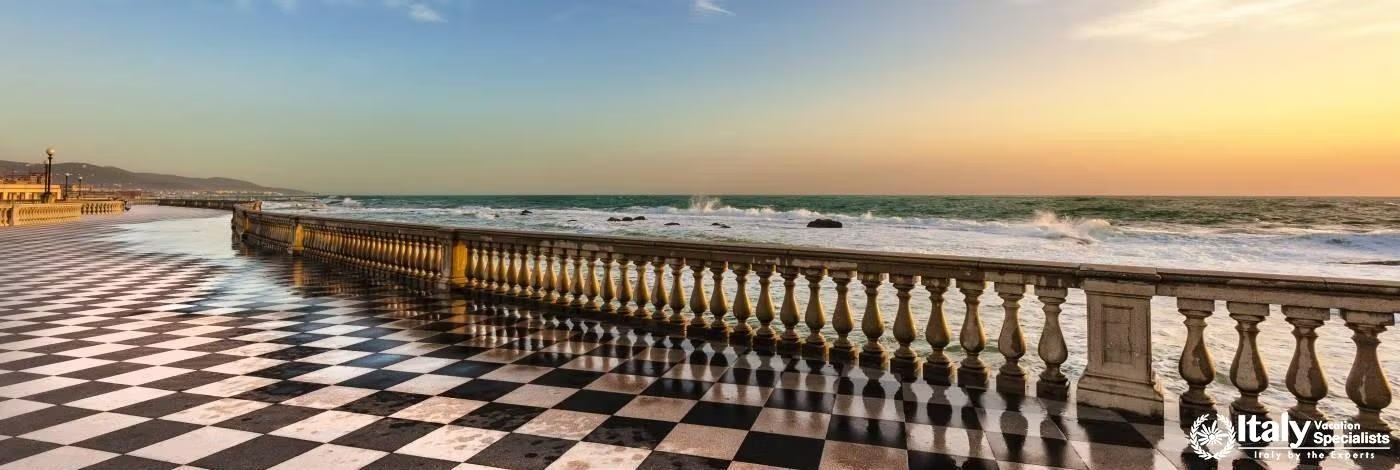
Along the waterside are a number of bathing establishments, most built in the 19th century. Some of these are impressively built over the water on pylons.  Proceeding south, one finally encounters a tiny beach, the Spiaggia della Bellana, then a black and white tiled terrace called the Terrazzo del Mascagni, which offers vistas of the harbor, and the Tuscan archipelago, which includes the islands of Elba, Capraia, and Gorgona.  On a clear day one can see Corsica, birth place of Napoleon, now a French possession.  Near the Terrazzo is the Municipal Aquarium where one will find a plethora of local and exotic fish and other marine life.
 
Also in the south end is the Museo Civico Giovanni Fattori, a contemporary art museum housed in the Liberty style Villa Mimbelli, which is surrounded by a lovely public park on via Jacopo.  The collection contains a large selection of works from artists of the so called Macchiaioli movement, an Italian take on French impressionism.  One of its greatest members, Giovanni Fattori, was born in Livorno in 1825.
 
Ferdinand I, then Grand Duke of Tuscany, made Livorno a free port in 1618, inviting all comers to use it as a trading base.  The Jews, much persecuted throughout Europe and elsewhere, established a large "colony" here.  English Catholic exiles also settled in Livorno and it was they who gave it its English name, Leghorn.
 
In 1691, Ferdinand II, Grand Duke of Tuscany, after the  British and French navies bombarded the Dutch who were stationed in Livorno, declared Livorno to be a neutral port by International treaty.  The treaty was violated by Napoleon who established a blockade.
 
Livorno endured declining importance, and a great deal of strife, particularly during the Risorgimento when it largely sided, against the Grand Duchy of Tuscany, with the forces trying to achieve Italian unification and independence, which was finally accomplished in 1860.  The port filled important naval functions in the two world wars, and suffered immense damage in the second world war as a result of Allied bombing.
 
Livorno regained its importance as a commercial port when new port facilities were constructed in 1954.  It is now being discovered by travelers and tourists who are beginning to understand that the the city in its entirety, like Genoa say, is of interest, even if it lacks the significant individual attractions one finds in scores of other Italian towns and cities.
 
- Jesse Andrews, 2016 

Our Private and Small Group Tours

Our Featured Properties

Quick Enquiry Form

Tell us about your dream trip and we'll craft the perfect itinerary for you.

Livorno

Stories That Stay With You

Here's what our guests share about their unforgettable journeys

“Jesse, There are no words to describe the fabulous time we had in Italy. Everything went as you promised. Absolutely no problems! The venues were fabulous. The guides were punctual and helpful. It couldn't have worked out better. You and your staff deserve high praise for the quality and efficiency of your work. BTW, Guiseppe was an absolute delight. We enjoyed his informative and effervescent per”
[Read More] Jo Ann West
“This company really knows their stuff and recommended our family to stay longer in each location. We didn't listen to them, but wished we had in every single place we went. They recommended Sestri Levante over the Cinque Terre which was our favourite destination on our entire trip. We visited Rome where we stayed in the outstanding Hotel Locorno where they know the owner there, like in every place”
[Read More] Sean & Veet Chapman, CGA
“I traveled with JoAnn West through your services, guided by Giuseppe, in July of this year. What a wonderful experience; your service is really top notch! If I return to Italy for a tour, I will absolutely use your services again and recommend you to my friends!”
[Read More] Lucretia Brower
“I am a travel agent from Lebanon and have organized several group tours as well as individual tours of Italy with Italy Vacation Specialists. I highly recommend them as one of the very best tour operators in Italy to work with, given their professionalism and work ethic which I feel is second-to-none in the travel industry. All of the staff, the guides, the coaches and even the meals we enjoyed we”
[Read More] Nicole Haddad, Lebanese Travel Agent
“I am a travel agent with All About Honeymoons and I would highly recommend Italy Vacation Specialists. Jessica was wonderful in helping us plan in a last minute anniversary vacation during high season without any issues. She even checked on our clients while on vacation to make sure things were going well. I plan on using them again soon for all my future bookings!”
[Read More] Tammy Joyce, All About Honeymoons
“Dear Guiseppe and Jesse, We just returned from our most wonderful vacation to Italy and wanted to first thank you for putting together such a wonderful trip, and second to provide some feedback for the future. Hotels 1. Hotel Sovestro in San Gimignano was wonderful. The staff were very friendly and helpful and made the first portion of our journey very stress free. They made us feel like we were p”
[Read More] Ron and Deb Crosby
“I have traveled to Italy 2x with the IVS for my own pleasure trips and 2x for business with IVS. These guys really pay attention and make your trip go like clockwork. Italy is nuts, just saying! There are so many rules and restrictions now, so we did not want to drive ourselves. Having traveled with them many times and done business on several occasions, most definitely USE this company. They know”
[Read More] JoAnne Beaudoin, Retired Nurse
“I went to high school with the owner of the company who organized my honeymoon for myself and my now wife from Tokyo. We spent three short weeks seeing Piedmont and experiencing wine paradise there, then heading to Nice in France with our private driver and flying to Rome where honestly 4 days is NOT enough. They keep saying to spend more time and we could not agree more! You need to spend more ti”
[Read More] Robin and Kumi Bruun, Tokyo Japan
“We're home now from the most amazing trip to Italy! I can't thank you enough for your efforts and coordination of what was without question the finest vacations I've been on to date.”
[Read More] Carol Carson
“As a travel agent, but also a traveler to Italy, thee is no other company I would recommend than the Italy Vacation Specialists. Not only do they really care about what they are doing, they also really know Italy and try to educate many people about ways they can best see the country and not fall into tourist traps. I have been on 4 trips with the IVS team, firstly when they did my first 2 trips f”
[Read More] Laura Chomiak, Travel Agent

For customized holidays and expert advice for travel in Italy and the Mediterranean, Get in touch with your travel agent or contact us via our.

  • Direct In Italy: +39 375 823 5314

  • Toll Free: 1-866-779-2565